

Disclaimer: This case study demonstrates my design process and problem-solving approach. All client-specific data and proprietary information have been anonymised, with only limited, non-confidential elements included to illustrate the work.
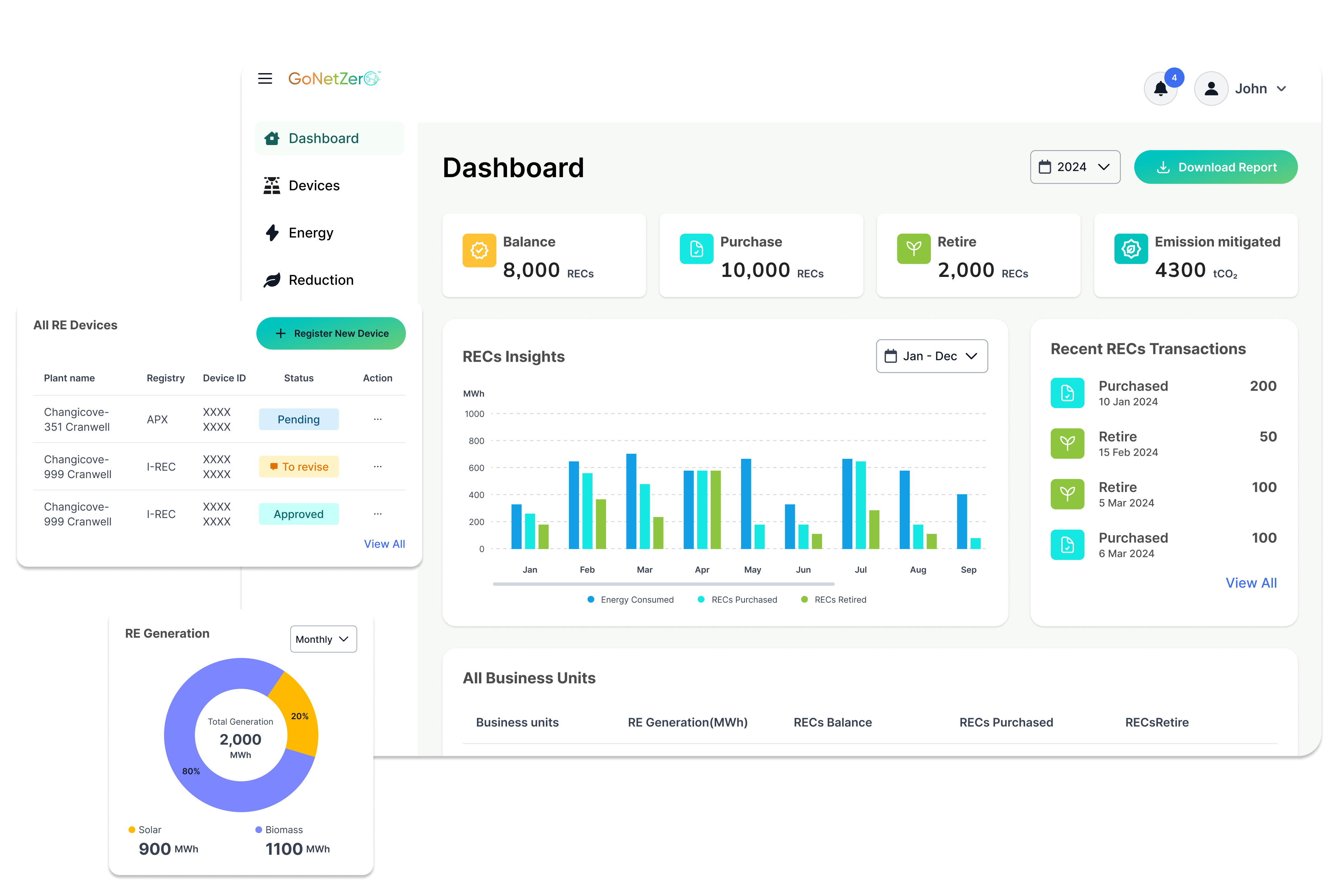
GoNetZero is a B2B sustainability platform helping businesses track emissions, manage renewable energy + certifications, and optimise their path to net-zero.
1. Revamped Renewable Energy Tracking Dashboards
2. Designed new self‑service solar asset registration workflow
3. AI-Powered Emission Recommendations
Led end-to-end design, including user and stakeholder research, workflow and feature design, and delivery handoff.
The Dashboard is a key feature for Sustainability Managers, who need to monitor their renewable energy generation, REC transactions, and subsidiary performance as well as communicating this clearly to internal stakeholders.
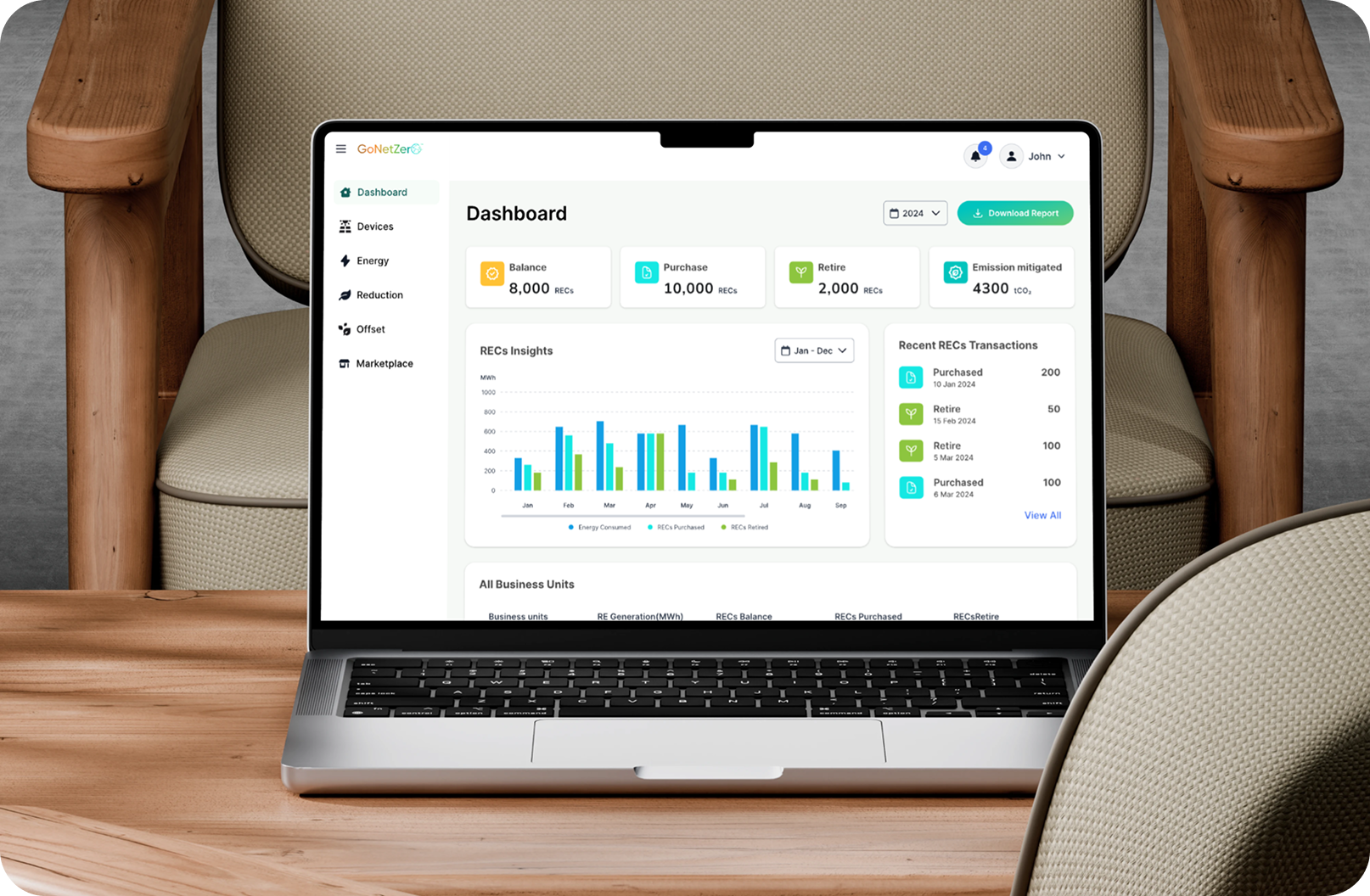
Sustainability Managers needed a way to monitor renewable energy generation, track REC transactions, and communicate performance to internal stakeholders.
The existing dashboard lacked depth, clarity, and timely updates, forcing users to rely on fragmented spreadsheets and manual calculations.
This slowed reporting, reduced confidence in presenting findings, and made informed decision-making difficult.
- Evaluated the current dashboard
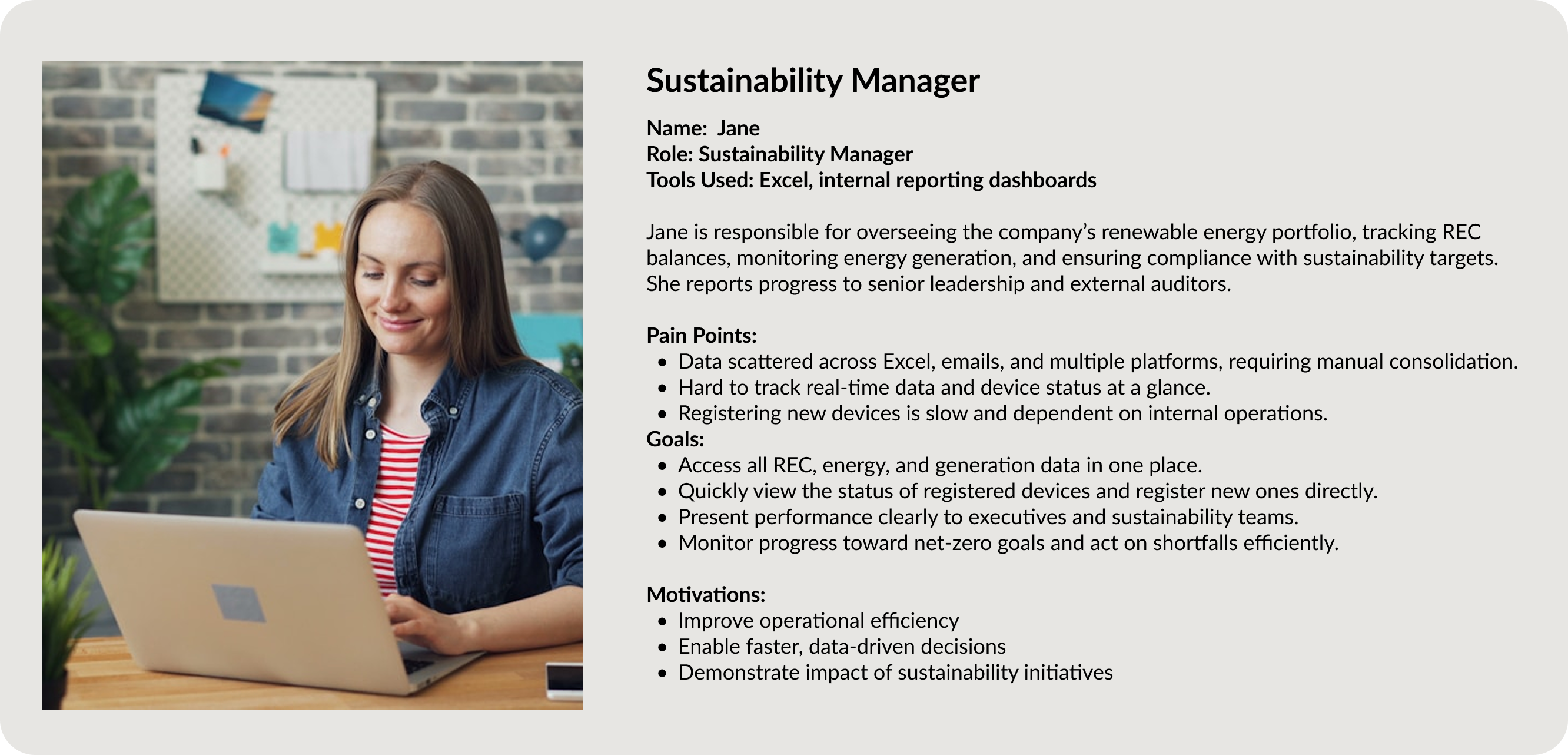
- Conducted user and stakeholder research to refine personas
- Mapped workflows and defining key features
- Designed intuitive, data-driven interfaces and delivering designs for implementation
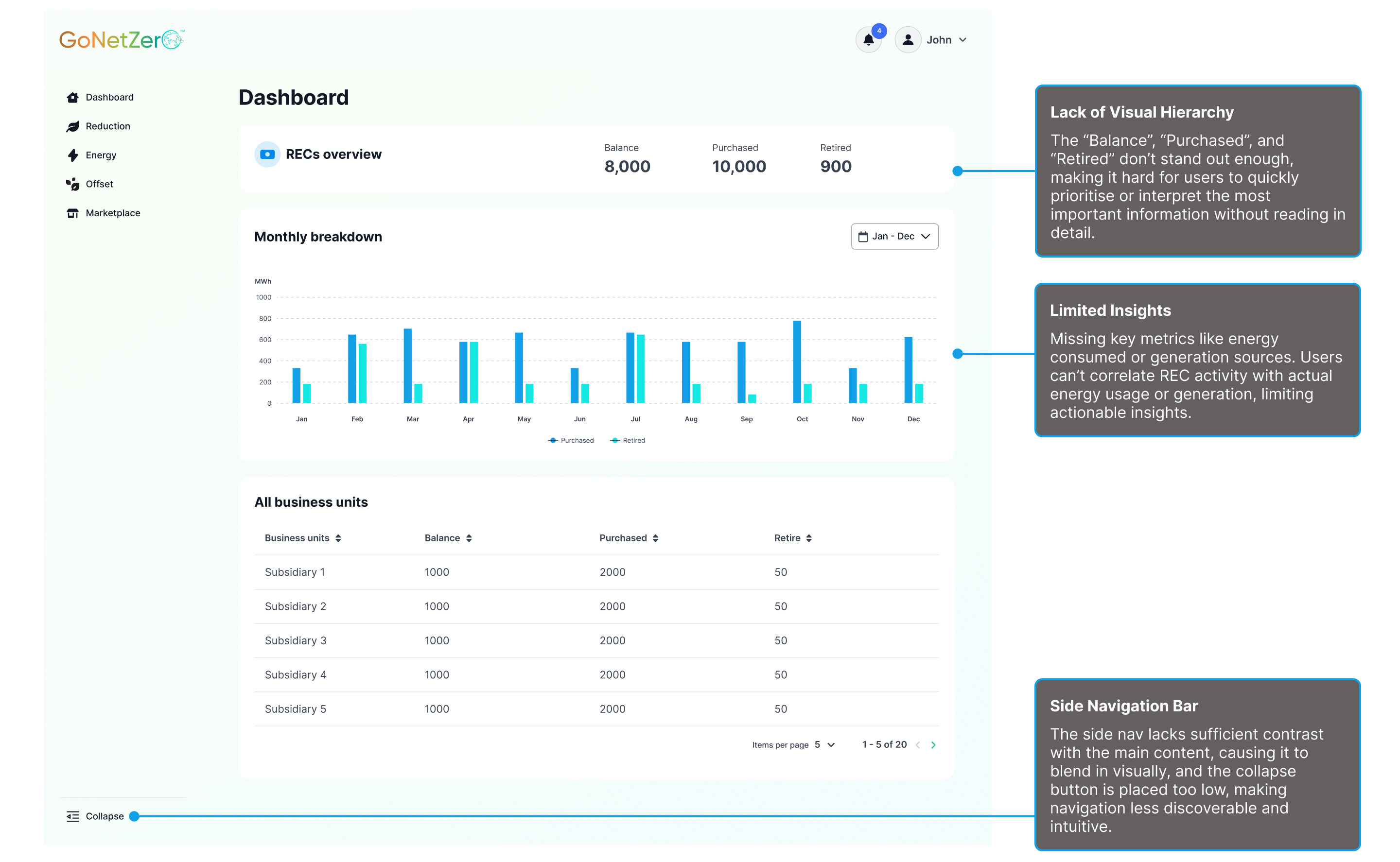
Audited the dashboard to evaluate its usability, information hierarchy, and visual clarity, with findings that shaped the priorities for the redesign.
Conducting user and stakeholder research to refine personas

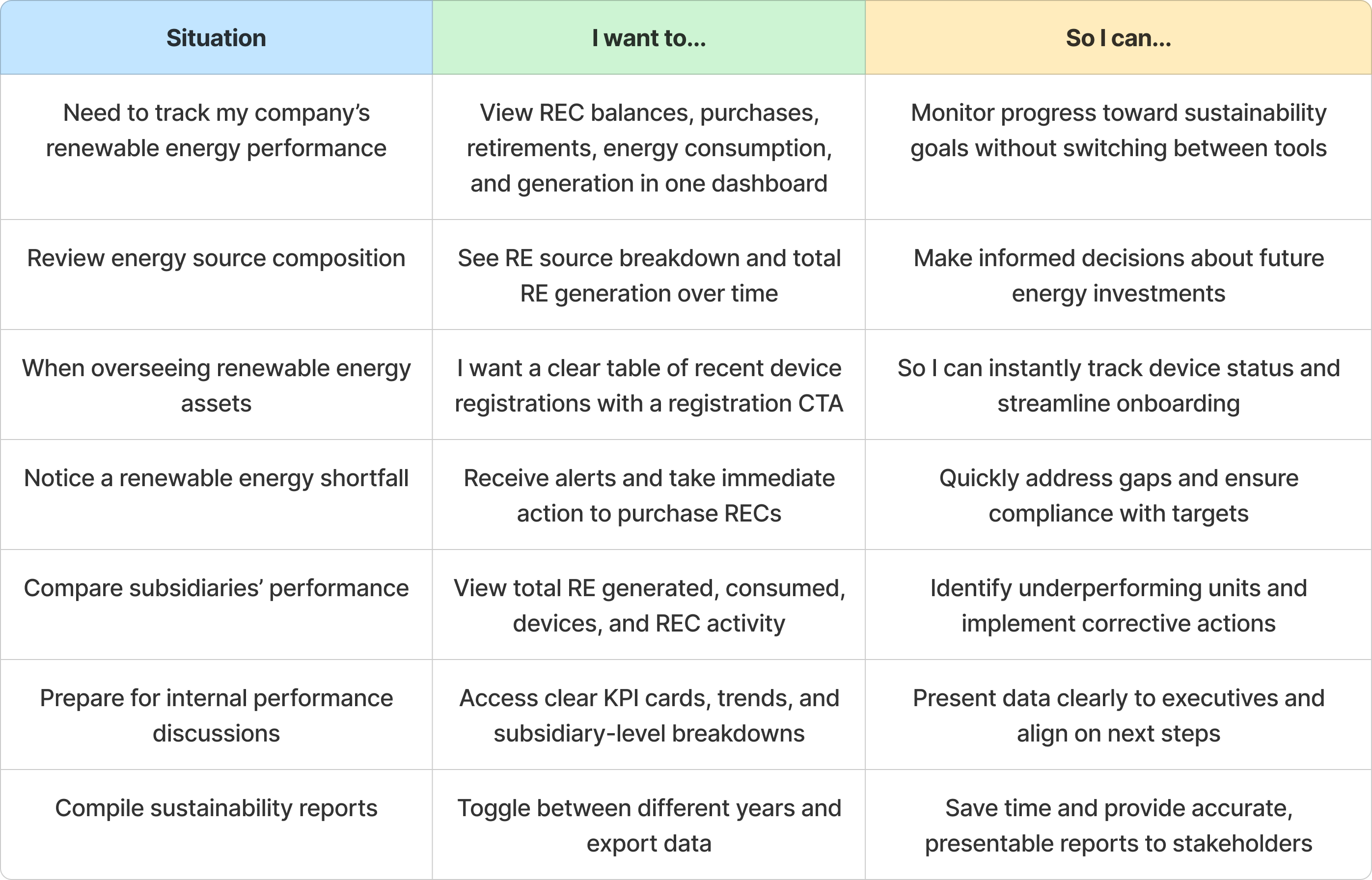
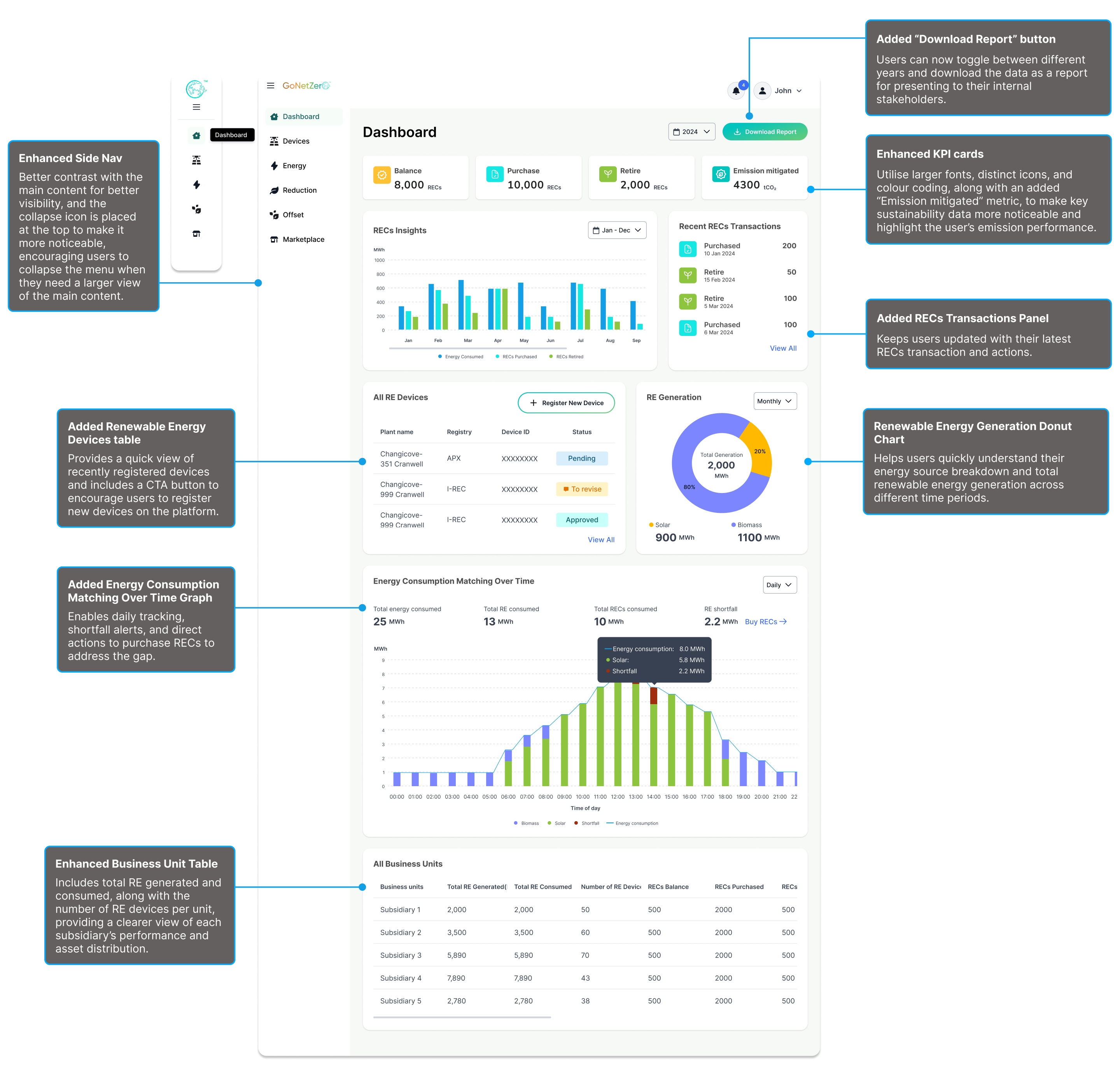
Designing a Unified Dashboard for Enterprise Sustainability Managers, enabling clear visibility into renewable energy assets, REC balances, and performance metrics to support smarter, data-driven decisions.

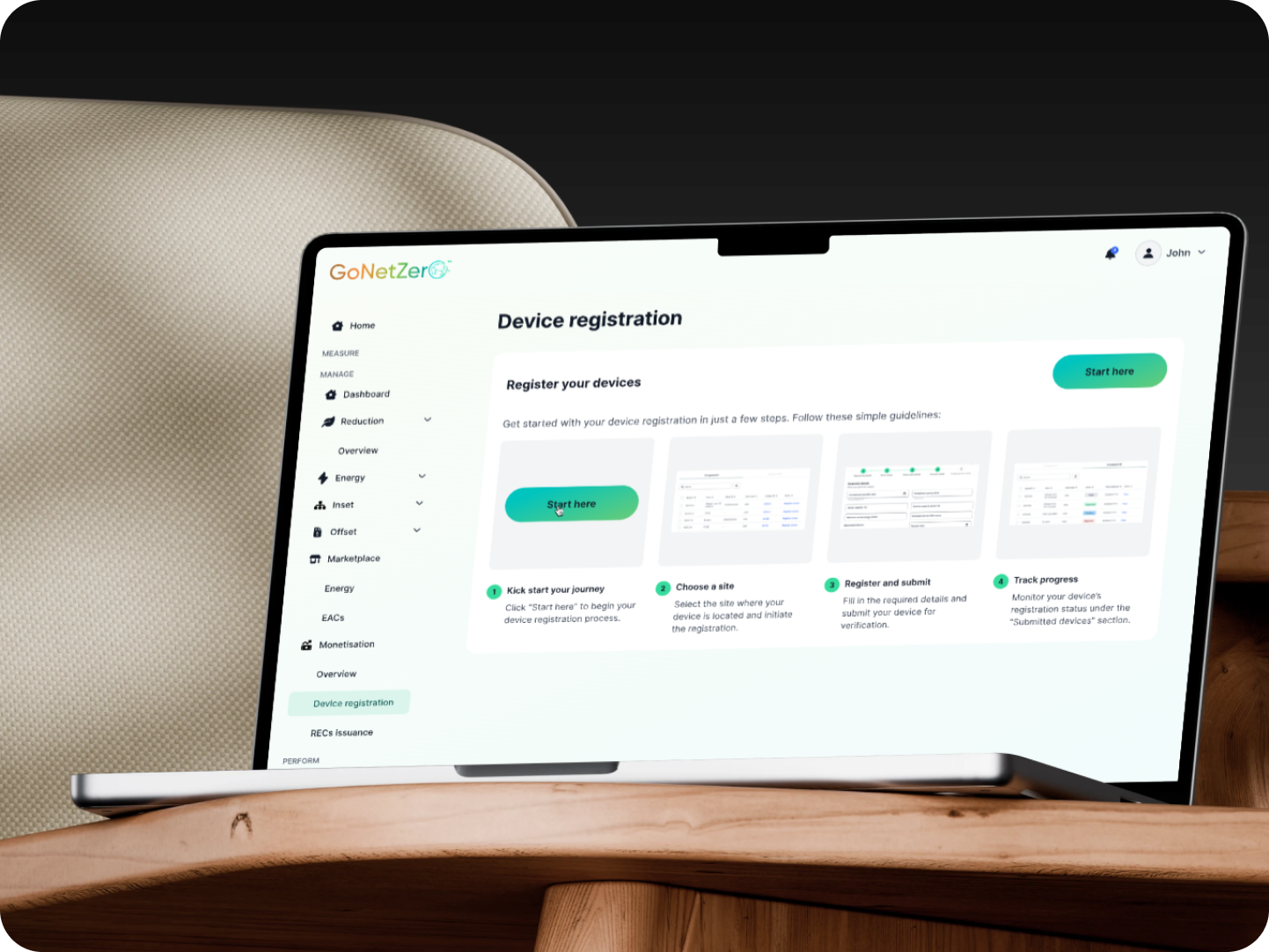
Streamlining Renewable Energy Device Management for Enterprise and Internal Ops. Allowing enterprise users and GNZ internal teams to efficiently track and register solar devices.
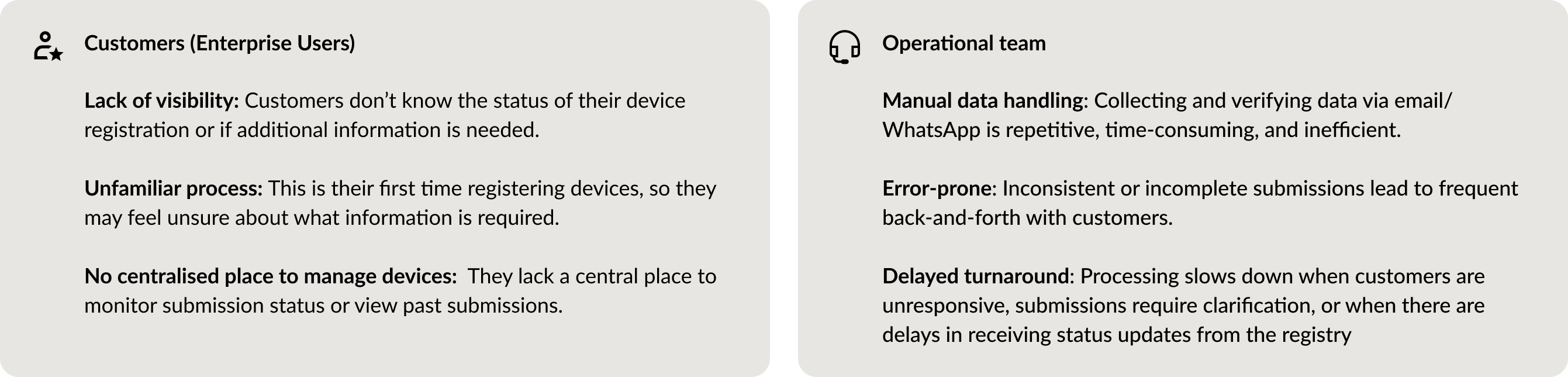
The business was shifting solar device registration to a self-service model, but customers often struggled with the complex form-filling process and managing multiple devices.
- Audited the current manual workflow to understand bottlenecks
- Interviewed internal operations teams to uncover pain points
- Analyse customer submission patterns and challenges, noting delays, repeated clarifications, and fragmented communication
- Implement a new workflow and streamline the file filling process
Audited the manual workflow where customers submitted device information via email or WhatsApp to the operations team, causing delays and fragmented updates. Interviewed the internal operations team to uncover bottlenecks and key pain points.
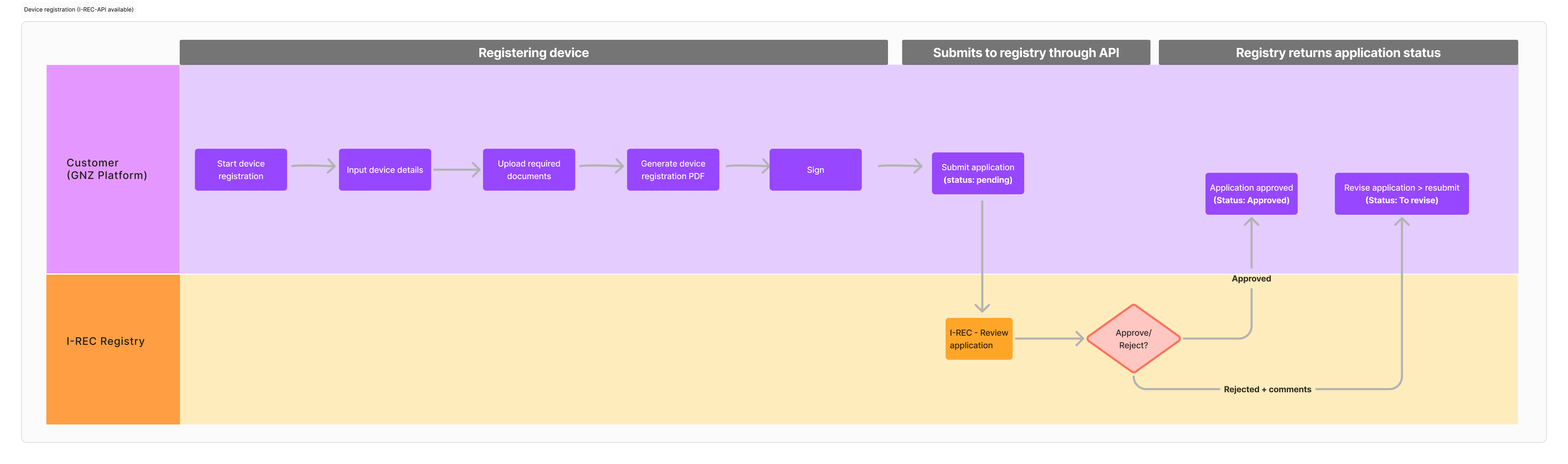
Redesigned the solar device registration workflow to support both enterprise users and internal operations teams, introducing a guided submission flow, centralised device management, and integration with a third-party registry for streamlined processing.

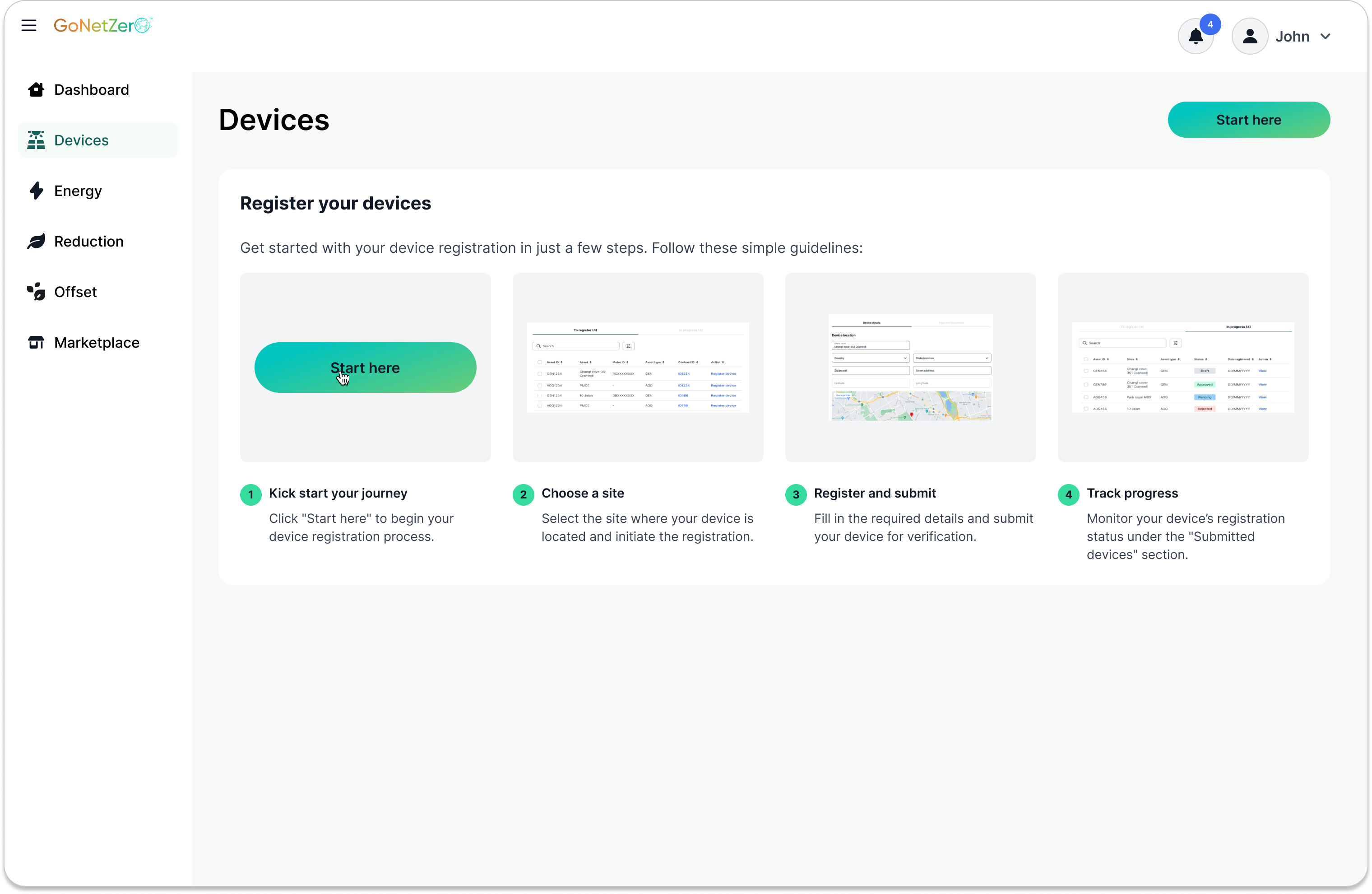
Kickstarts the process by guiding first-time users with confidence, breaking down a complex, unfamiliar workflow into clear, actionable steps. It also helps them to understand what to expect at each stage, making the process much easier.
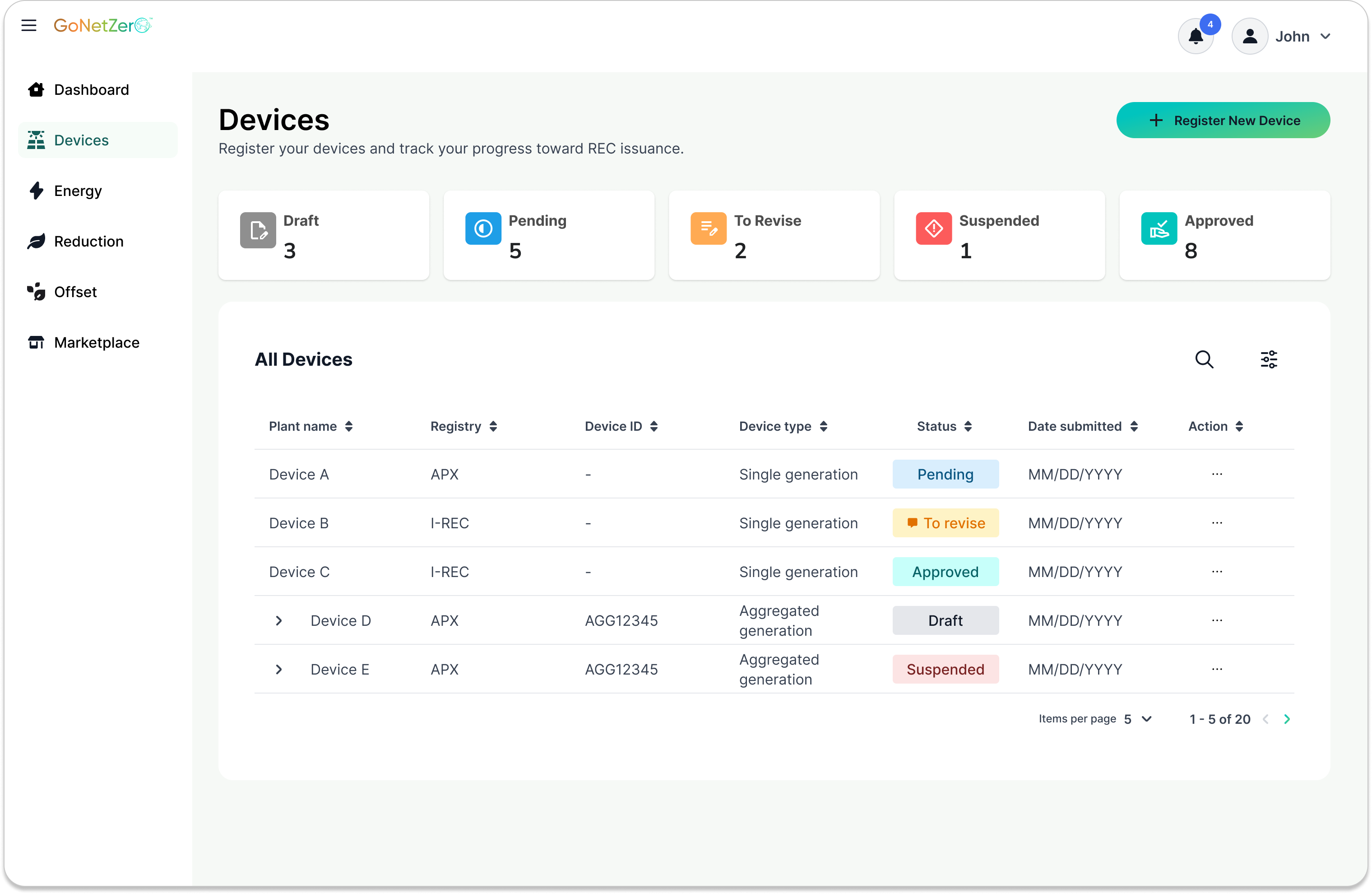
Users can easily manage and track all their device registrations in one place, with a clear overview of each status at a glance.
Users are guided through the form step by step, with clear field groupings and validation to ensure all required information is completed before submission. Sample inputs and document guides help clarify what’s needed, making the process faster and easier to complete.
View Prototype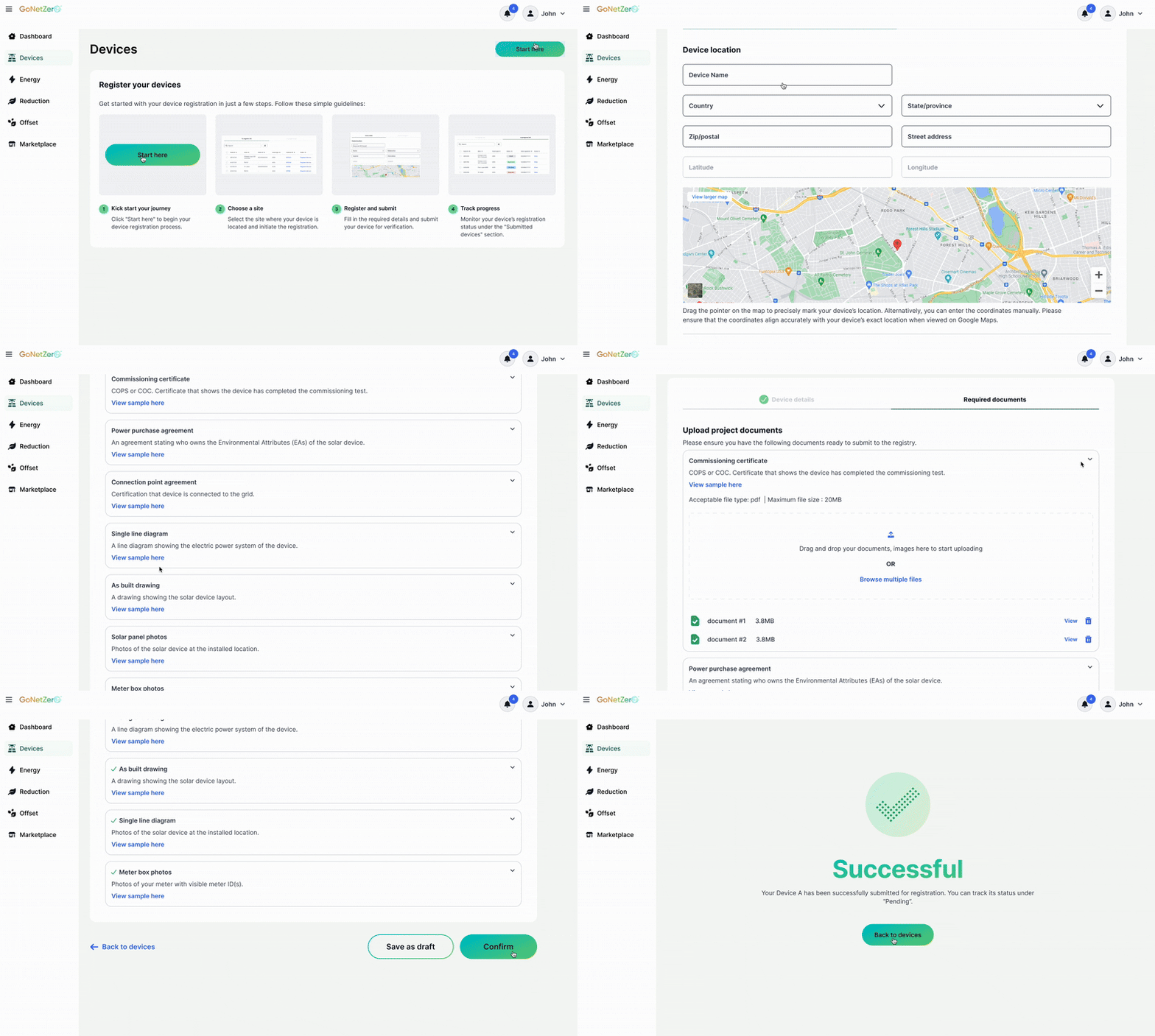
Designed an AI-powered recommendation page to help enterprise sustainability managers identify actionable initiatives to reduce emissions.
The tool provides insights across business units and allows managers to track progress, prioritise actions, and demonstrate measurable impact to stakeholders.
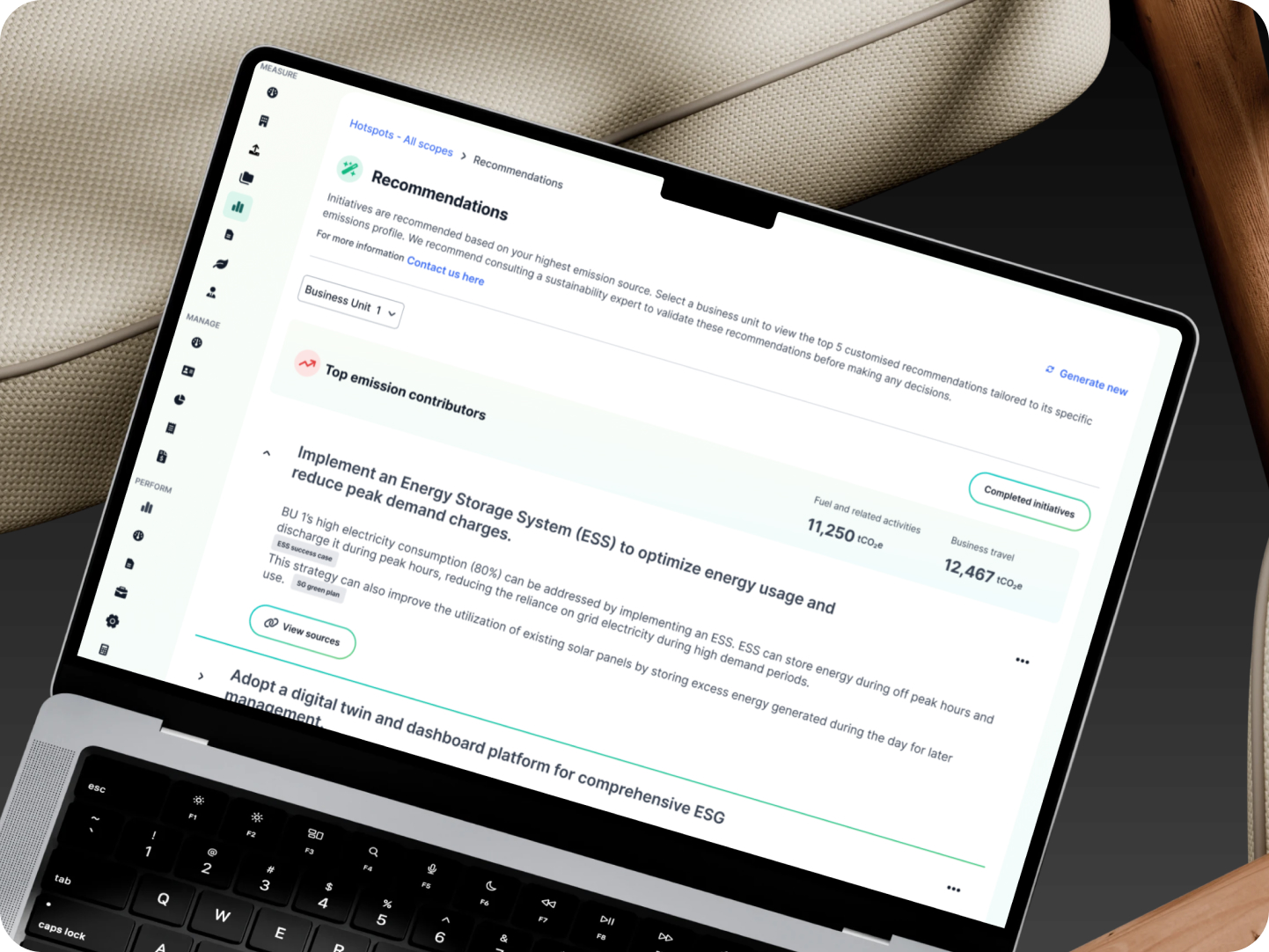
Enterprise sustainability managers often struggle to determine which actions will meaningfully reduce emissions. They need a fast and efficient way to identify which initiatives are worth investing in.
Managers also require visibility into emissions and recommended actions across other subsidiaries to monitor progress and make informed, data-driven decisions.
- Defined workflows for AI-generated recommendations
- Designed interactive interfaces and visualisations for actionable insights
- Collaborating with product and AI teams to ensure recommendations were practical and aligned with business goals
The design is tailored to give user a quick overview of all their subsidiaries, highlighting AI-driven recommendations for reducing emissions. It provides a customised view of cross-subsidiary performance, surfacing high-impact initiatives worth investing in. Managers can also track the progress and completion of their initiatives, enabling top management to monitor what actions have been implemented and measure their impact.


Copyright © 2021 Kai Xin. All rights reserved.